Clear circulation
Consider routes, turning space, resting points, sightlines from seated positions, and places where objects or people could create barriers.
Inclusion and access
Voces en Capas treats access, cultural care, and representation as part of curatorial practice—not as a final checklist added after the story is built.
Practice principles
The app offers prompts, not certification. Real venues and communities have specific needs, rules, histories, and expertise that an offline general-purpose tool cannot determine.
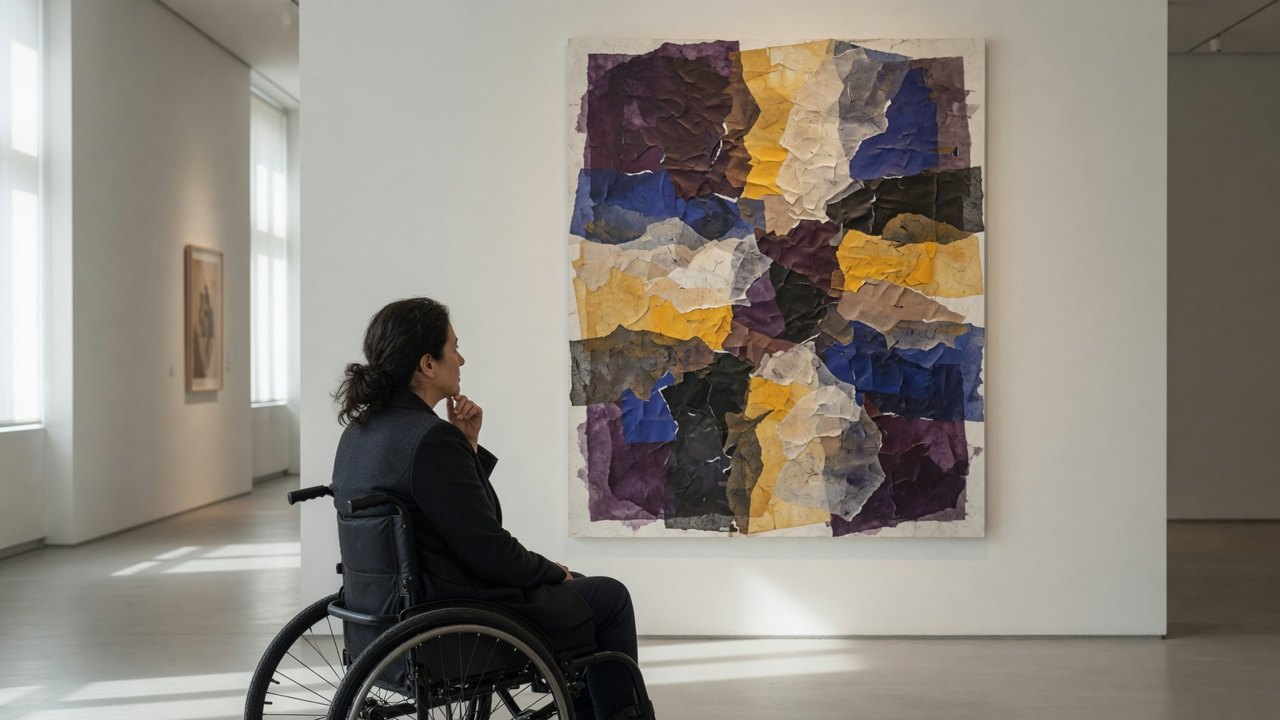
Consider routes, turning space, resting points, sightlines from seated positions, and places where objects or people could create barriers.
Use meaningful headings, sufficient contrast, scalable text, generous touch targets, visible focus, and concise instructions.
Balance dense and quiet areas, explain motion, avoid surprise audio, and provide an experience that remains complete when animation is reduced.
Begin image descriptions with an overview, identify medium and orientation, then follow a clear path through visible details before interpretation.
Invite noticing, comparison, questions, and uncertainty. Do not rank one cultural reference, learning style, language background, or aesthetic preference as universal.
Keep progress private, avoid identity fields, and let users reset without contacting the publisher or explaining why.
Representation and cultural care
Fictional works and scenes in the app are newly created for this product. They do not reproduce real Nuestra Creación exhibitions, identify real participants, or imitate a named artist's recognizable style.
Prompts ask users to distinguish observation from inference, seek permission before sharing another person's story or image, attribute creators accurately, avoid presenting sacred or restricted cultural material without authorization, and make space for people to name themselves.
The app does not decide cultural ownership, grant permission, clear copyright, authenticate art, or replace consultation with artists and communities.

Digital accessibility
The app and this website should be tested with keyboard navigation, screen readers, large text, high contrast, and reduced motion. Automated tools support review but do not replace testing with disabled people.
A continuing practice
When planning a real exhibition, involve the people affected, follow venue requirements, compensate expertise when appropriate, and verify the current standards relevant to that context.